
It’s hard to ignore the global conversation around bioplastics right now.
Across boardrooms and government meetings, these are pitched as the future of packaging, shopping bags, and even car parts.
And there’s a good reason for that. The worldwide bioplastics market is expected to grow at a rate of 16.8% and reach $23.56 billion by 2029.
This growth is driven by a simple reality. People everywhere are waking up to the scale of plastic pollution.
Let’s put it in perspective.
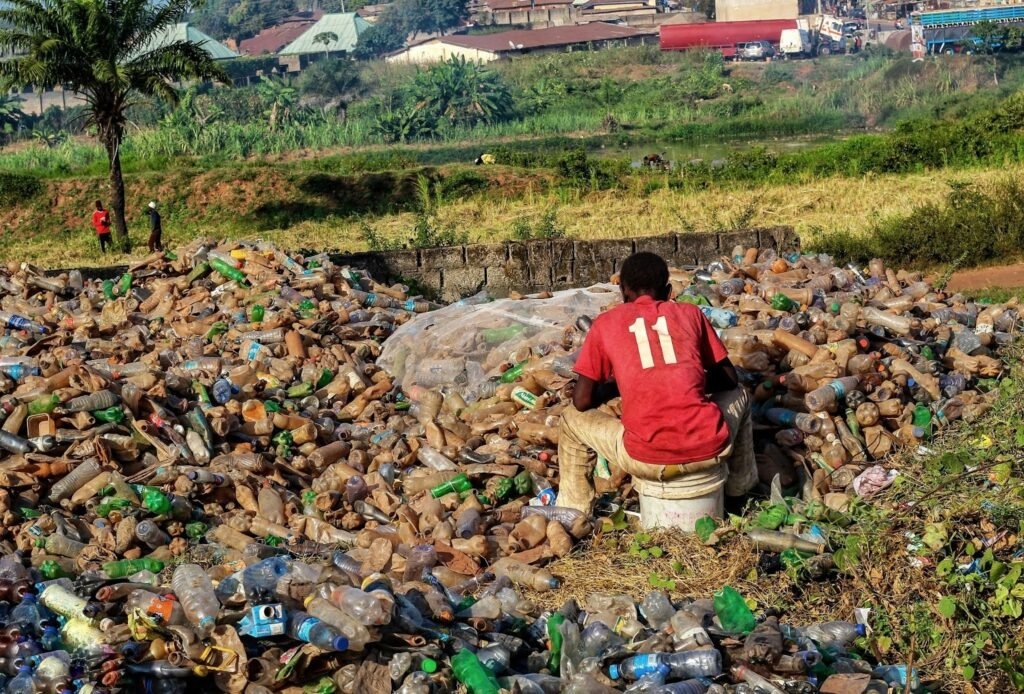
The world produces more than 430 million tonnes of plastic each year.
Only a small fraction gets recycled. The rest either ends up in landfills, is burned, or leaks into the environment. It harms everything from soil health to ocean life.
So it’s no surprise that many see bioplastics as a possible answer. It offers the promise of materials that break down naturally. It also vows to use less fossil fuel and reduce pollution overall.
But with the market for these “greener” plastics exploding right now, we are facing important questions like:
- What exactly are bioplastics?
- Are all of them truly better for the planet?
- Where do honest claims end and greenwashing begin?
To answer these, we need to go beyond headlines and look at how bioplastics are being marketed, used, and regulated worldwide.
Let’s start with the claims and confusion that have come to surround the word ‘bioplastics’ with allegations of “greenwashing.”
An Honest Look at Bioplastic Greenwashing
Now, let’s talk about a term that’s getting a lot of attention: greenwashing.
It’s when a product, service, or company is given an exaggerated or even false environmental image.
Think of when advertising makes something seem much more eco-friendly than it actually is. It’s greenwashing by definition.
Let’s look at a few common greenwashing examples in the bioplastics industry:
- Labeling products as “eco-friendly” even when they are only partially made from plants. Some may even contain as much synthetic plastic as conventional options.
- Packages that boldly declare “100% biodegradable” or “compostable anywhere.” They simply hide that you need an industrial composting system. A hole in your backyard or a landfill won’t get the job done.
- Companies that mix bio-based with fossil plastics and use the “bio-” prefix. They only do this to distract consumers from what the material really is.
Even the terms bioplastics and biodegradable plastics are sometimes misused.
Brands often treat them as interchangeable. In reality, not all bioplastics are biodegradable. Similarly, not all biodegradable plastics are truly biobased.
So, what is the reason behind bioplastic greenwashing?
The reasons are simple but dangerous. For starters, regulations and standards differ widely across countries. Technical terms are not always explained to the public.
Most importantly, businesses want to look green to attract environmentally conscious consumers and investors.
This kind of greenwashing does real harm. It misleads people and clutters up recycling and compost streams. Ultimately, it creates new waste challenges.
And perhaps the most worrying part is that it makes people skeptical of genuine innovation.
Do Bioplastics Really Help the Environment?
Let’s get to the heart of the matter. Do bioplastics actually deliver on their environmental promises?
Sometimes yes, and sometimes no. It’s all about context.
- Some bioplastics are made from renewable materials. Corn starch, sugarcane, or even agricultural waste is used. This can cut down on the use of fossil fuels and lower emissions of greenhouse gas.
- Certain bioplastics and biodegradable plastics do break down under industrial composting conditions.
- Bioplastics don’t take centuries to degrade like regular plastic. They turn into water, soil, or carbon dioxide within months.
But here’s where the plastic pollution facts get more complicated.
Not all bioplastics break down outside controlled industrial composters.
In fact, a well-known UK study found “biodegradable” shopping bags still intact and able to hold groceries after three years in soil.
Furthermore, some bio-based plastics are chemically identical to conventional plastics.
They might come from plants, but they still stick around in the environment. Some even break down into microplastics.
Crop-based bioplastics are a better alternative. But if not managed carefully, they can use significant land and water.
So, do bioplastics help? They certainly can. But it’s only when they are made responsibly and disposed of properly with the right infrastructure.
How Can You Spot and Avoid Greenwashing in Bioplastics?
With clever marketing, it can be difficult to spot greenwashing.
The good news? There are ways to spot legitimate bioplastics. You need to look for clear, third-party certifications like:
- BPI in the US
- EN 13432 in the EU
- ASTM D6400
- CPCB certification in India
For these certifications, the products have to be put through rigorous tests.
Certification is only given if the material actually meets compostability or biodegradability standards. They don’t blindly trust what the company claims.
Next, watch out for red flags:
- Labels like “eco-friendly” or “natural” with no further detail.
- Claims of “biodegradable” or “compostable” with no mention of whether you can compost at home or in industrial facilities.
- “Plant-based” plastics that contain only a small percentage of biobased material.
Here’s a simple checklist you can use:
- Is there a recognized certification?
- Does the product clearly state how it should be disposed of?
- Are the advantages of bioplastic explained honestly, or just implied?
If the answer is no to any of these, tread carefully. This could be another example of greenwashing.
Are Current Bioplastics Regulations Strong Enough?
Greenwashing often overshadows the real benefit of bioplastics. We need strict regulations to make real innovation.
Right now, global regulations on bioplastics are mixed.
For instance:
- In the EU, the Single-Use Plastics Directive bans many problematic plastics. Anything labeled “compostable” must meet the strict EN 13432 standard. “Oxo-degradable” plastics (which just break down into microplastics) are outright banned.
- India has one of the world’s toughest stances. Single-use plastics like straws, cutlery, and bags are banned. Bioplastics must have official CPCB certification. Or else, they cannot be marketed as compostable.
- The US takes a state-by-state approach. Some states make ASTM D6400 compliance necessary. Others are less strict.
- Across the Asia-Pacific, many countries are following the EU and India. Bans and requirements are in place, but enforcement varies widely.
The good news is that regulatory gaps are closing. As the dangers of plastic pollution and greenwashing become clearer, this gap is likely to get smaller.
Why Bioplastics Made from Agricultural Waste Could Be a Real Solution?
When trying to solve the plastic problem without repeating old mistakes, we found a solution that really works.
I’m talking about making bioplastics from agricultural waste.
Most conventional bioplastics rely on corn or sugarcane. Though renewable, they need land, water, and energy. Sometimes, these are even grown instead of food crops.
That’s where agri-waste makes a real difference.
Take hemp, nettle, and flax, for instance. These crops are already grown for other uses. Their stalks and fibers often go to waste after harvest.
We can turn this “waste” into bioplastic materials. It can essentially solve several challenges at once:
- No competition with food crops
- Lower land and water use
- Extra income for rural farmers
- Less burning of crop residue
Here at UKHI, we transform agri-waste from these plants to create biodegradable granules.
Our EcoGran™ biopolymer is then used to create various bioplastic products.
This approach helps build a circular economy. It helps to create rural jobs. It also reduces the environmental footprint.
Final Words
Simply swapping one material for another won’t make bioplastics sustainable. Consumers need to demand better standards. And companies need to be honest in their communication.
Greenwashing claims about bioplastics can slow down progress. But the solution isn’t far-fetched.
Real change can come when we choose bioplastics carefully. Make sure to ask for proof behind every claim. Governments also need to invest in proper waste systems.
That’s how we push for actions that truly work.